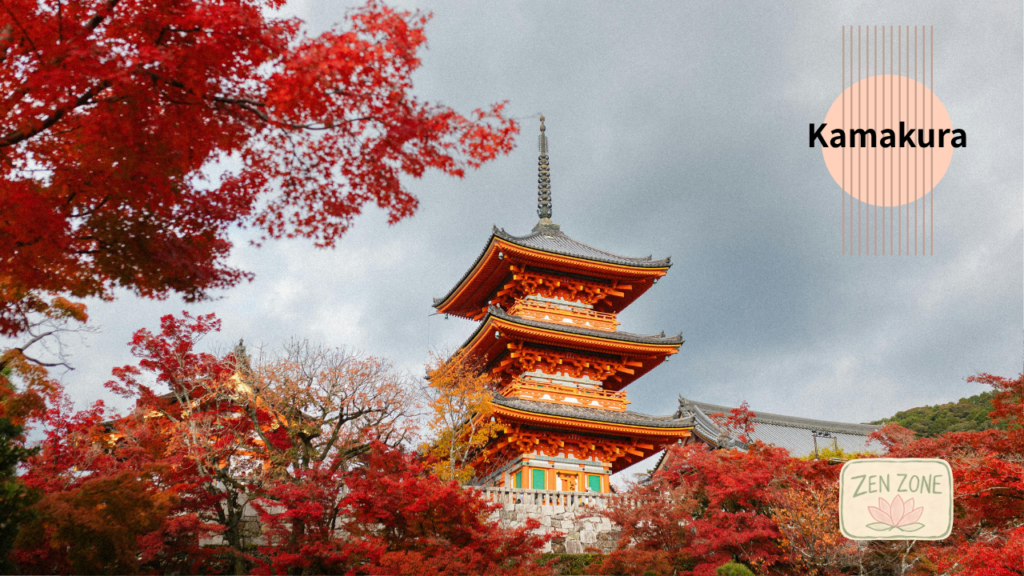
Zen, Samurai, and Sacred Landscapes
Explore Kamakura, Japan’s medieval capital, through its temples, shrines, sacred landscapes, Zen tradition, and samurai history.
This walk introduces Kamakura not only as a beautiful historic town, but also as one of the most important centers of Buddhism, Zen, and warrior culture in Japan. A classic route may include places such as the Great Buddha, Hase Temple, and Tsurugaoka Hachimangu Shrine, while exploring the relationship between religious devotion, samurai power, and the natural landscape.
For guests who are especially interested in Buddhism, Zen, quiet temples, and the more spiritual side of Kamakura, a Kita-Kamakura-centered route is also possible. Kita-Kamakura has some of Kamakura’s most important Zen temples, but it also offers smaller, quieter temples where there may be few tourists. Depending on your interests, we can combine major temples with smaller hidden places, or focus almost entirely on quiet temple spaces away from the busiest sightseeing areas.
Kamakura is especially personal for me. I grew up in Kamakura from elementary school through high school, and my family lived in the hills near the Great Buddha and Hase Temple. I also attended a high school connected with Kenchoji, Japan’s oldest Zen temple. Because of this background, I can introduce Kamakura not only through history and scholarship, but also through lived experience.
As a specialist in Japanese religion, Zen thought, and Japanese philosophy, I can help you understand Kamakura’s temples and shrines as living cultural and spiritual spaces — places where Buddhism, samurai culture, nature, and Japanese aesthetics come together.
Possible routes may include:
- a classic Kamakura route with the Great Buddha, Hase Temple, and Tsurugaoka Hachimangu Shrine
- a Kita-Kamakura route focused on Zen temples, quiet temple spaces, and a deeper Buddhist atmosphere
- a combination of major temples and smaller, less crowded temples
- a quieter route for guests interested in spirituality, contemplation, and Japanese aesthetics
Topics may include:
- the Kamakura period and Japan’s first samurai government
- Zen and Buddhism in Japan
- emptiness, nothingness, and contemplative experience
- the Great Buddha and Buddhist devotion
- Hase Temple and Kannon worship
- Tsurugaoka Hachimangu Shrine and warrior culture
- Kita-Kamakura and Zen temple culture
- quiet temples away from the busiest tourist areas
- sacred landscapes and Japanese aesthetics
- Kamakura as both history and lived place
Duration: About 4.5 hours
Private tour fee: Please inquire.
Starting from your hotel in Tokyo.
Sarting time: about 9am.
A longer route of around 7 hours is also possible.
This can combine Kamakura’s classic highlights — such as the Great Buddha, Hase Temple, and Tsurugaoka Hachimangu Shrine — with the quieter temple world of Kita-Kamakura. This fuller route is especially good for travelers who want both the famous sights and a deeper experience of Zen, Buddhism, sacred landscapes, and Kamakura’s quieter atmosphere.
Extended route: About 7 hours (adjustable to your plan)
Private tour fee: Please inquire.